






















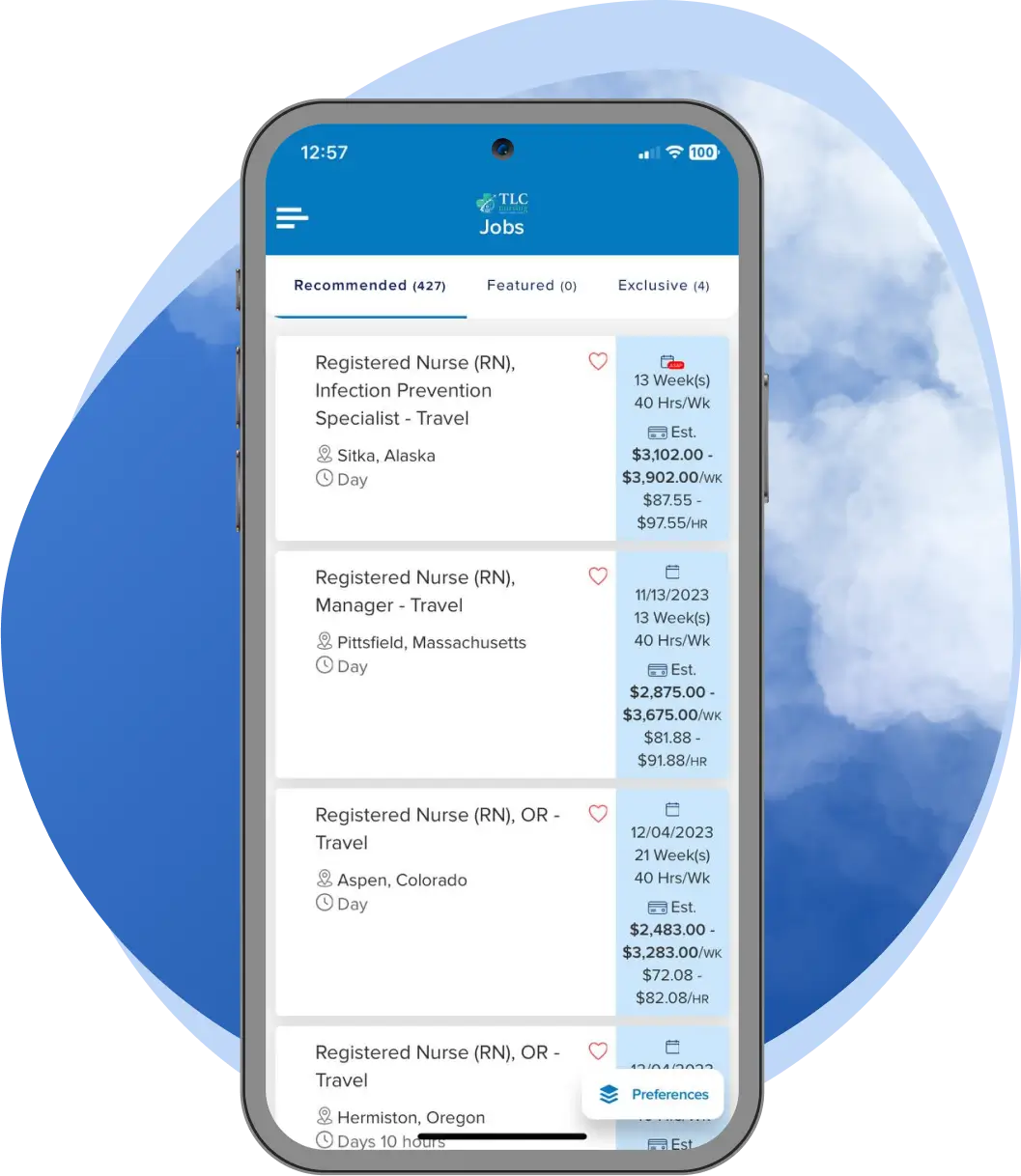
Travel allied health jobs are all about working short-term assignments at hospitals, rehab centers, outpatient clinics and rural facilities. It’s easy to get started—agencies help match you with assignments that fit your skills and preferences, making the process straightforward from the beginning. You join the team as a credentialed pro, do your contract, then move on to your next gig or take some time off between jobs.
Most contracts will have you working 36 to 40 hours a week. Your schedule will vary depending on your role, but imaging and OR roles often work 3 x 12 hour shifts, while therapy roles might work 5 x 8 hour days. Your pay package will include your taxable hourly wages plus a non-taxable stipend for housing and meals if you’re more than 50 miles from your assignment.
To qualify for allied health travel jobs, you need to complete the necessary education and training for your role, including any certifications or licenses required by the state. State-specific licensure is required for each state where you work, but interstate compacts can make cross-state practice easier for some professions. You’ll also need to meet compliance guidelines, such as obtaining state licenses and fulfilling continuing education requirements—these are some of the key things to keep in mind when starting your travel allied health career.
Agencies like TLC Nursing handle everything – they place you, sort out your credentialing, and get you the best pay possible. If you do a good job, facilities often offer to extend your contract. And because of compact agreements for PT and OT, you can now work in 30 or more states without having to re-license for each assignment.
The most in-demand travel roles span diagnostic, therapeutic, and laboratory specialties, reflecting the broad opportunities available in travel allied health.
Allied health jobs come in dozens of different specialties, often working closely with travel nursing professionals to deliver comprehensive patient care. Here are the most common categories:
Therapy Roles: We’re talking Physical Therapists, Occupational Therapists, Speech-Language Pathologists & PTAs working in acute care, skilled nursing & outpatient rehab. Pay usually ranges from $2,000 to $2,700 a week.
Diagnostic Imaging: Radiology Technicians, CT Technicians, MRI Technicians, Ultrasound Technicians & Interventional Radiology Technicians – they’re in high demand. High-cost regions like California are seeing CT Technicians earning $3,100 or more weekly.
Cardiovascular & Procedural: Cath Lab Technicians are often earning $2,800 to $3,500 a week in metro hospitals. Surgical Technicians & Perfusionists also command top dollar, with some perfusionist contracts reaching a whopping $6,000 weekly.
Respiratory & Lab: Respiratory Therapists have continued demand post-COVID, earning $2,200 to $2,900. Medical Lab Technologists & Pharmacists also find good opportunities, with outpatient pharmacist roles sometimes pushing $3,500 a week.
Support roles like CNAs & Medical Assistants exist, but generally don’t get you the pay you’re looking for.
Travel nursing is a related field, and travel nurses often collaborate with allied health professionals to provide high-quality, flexible healthcare across the country.
Many allied health travelers are earning between $2,000 and $3,000 a week in 2026 – with niche specialties reaching as much as $4,000 to $5,000 or more for urgent fills. Allied health travel professionals often earn significantly higher compensation than permanent staff and may receive tax-free stipends for housing and meals. Your gross pay will be a combination of your taxable hourly wages and a non-taxable stipend for housing and meals.
Regional differences do matter – West Coast & Northeast assignments often pay 20 to 30 percent above the national average due to cost of living. Your experience, certifications like RRT or ARRT, and willingness to work nights or weekends can all boost your earnings, contributing to the overall success of travel allied health professionals.
The contract life cycle starts when you apply through an agency or recruiter. After that, you’ll probably have a phone or video interview with the hiring manager. Once you accept an offer, onboarding will include background checks, drug screens, immunizations, and facility-specific modules.
Standard contracts run for 13 weeks, though you can find 8-week rapid response & 26-week extended assignments. Housing options usually include accepting a stipend to find your own rental or using agency-arranged accommodations near the facility.
Between contracts, most travelers take 2 to 4 weeks to plan their next gig. Working with a recruiter helps provide steady income and gives you access to exclusive jobs before they’re filled. Frequent relocation is common, so strong organizational skills and the ability to adapt to new environments and systems are essential for success in travel allied health.
Travel work can be an amazing game-changer, offering not only higher pay but also the flexibility and opportunities to grow your clinical skills and career. Financial benefits include comprehensive packages with medical, dental, and vision insurance, 401(k) options, and guaranteed weekly hours. Agencies also provide completion bonuses and even extra rewards for referring a friend, making your compensation package even more attractive.
When it comes to lifestyle benefits, you get to choose where and when you want to work—so why not winter in Phoenix and then spend the summer in Portland? And with extended breaks between assignments, you can avoid that dreaded burnout feeling.
Working at top-notch facilities like Level I trauma centers, academic medical centers, and specialty clinics across the country is also a great way to accelerate your career. What makes a travel allied health agency stand out is how they provide essential resources and support, helping you love your work and achieve your professional goals. TLC Nursing is with you every step of the way, offering amazing benefits, recruiter advocacy, and access to a huge range of contracts and resources to help you grow.
Start browsing for travel allied health jobs with TLC Nursing today and let a recruiter help you find your dream opportunity.
The main trade-off is between higher weekly pay and flexibility versus stability and long-term benefits – and what it all comes down to is what matters most to you. In both travel and permanent roles, nurses and allied health professionals work closely together, collaborating to provide comprehensive patient care. Staff positions come with great retirement plans, paid time off and paths into leadership roles, while travel positions offer premium pay and a chance to work in loads of different places – but also mean you’ll need to figure out where you’re going to live and what you’ll be doing next.
Travel Allied Pros:
Travel Allied Cons:
Permanent Pros:
Permanent Cons:
Talk to a TLC Nursing recruiter to see which path is right for you.
Demand for allied health professionals has seen a big jump due to high vacancy rates, retirements among Baby Boomers, and an aging population that needs more rehab and diagnostic services. Leading agencies like TLC Nursing set themselves apart with a personalized approach, helping travelers feel at home and supported wherever their assignments take them. On top of that, hospital expansions, new outpatient centers, and rural facilities are all creating more openings for clinicians who are willing to travel.
Seasonal trends also play their part. In the winter months, your skills are in high demand in places like the Midwest and Northeast, while in the summer the snowbird populations in Florida and Arizona drive up the need for imaging and therapy professionals. Travel allied health jobs offer the adventure of a lifetime, providing unique and memorable experiences across the country.
CT Tech, MRI Tech, Cath Lab Tech, Surgical Tech, Respiratory Therapist and Physical Therapist are all in high demand. Some of the most in-demand states include California, Texas, Florida, New York and Colorado, with big cities like Los Angeles, Houston, Miami and Denver offering the most openings.
Not all agencies are created equal—so it’s worth taking some time to research and evaluate. Look for agencies that focus on finding the right match between your skills, preferences, and available assignments. Seek transparency in pay breakdowns, recruiter responsiveness, contract clarity, and support with housing and licenses. Check out what other travelers have to say about the agency and compare at least two offers before you commit to one.
TLC Nursing aims to be a partner that values integrity, timely communication, and long-term relationships with allied travelers. Agency support plays a crucial role in your overall success as a travel allied health professional, so ask your recruiter about guaranteed hours clauses and how often you can expect to be assigned to a new contract in your preferred states.
Reputable agencies like TLC Nursing put clarity and respect for your decision-making process at the top of their priority list.
How much experience do I need before I can start traveling?
Most facilities require at least 1 year of recent experience in your specialty, with many preferring 2 years for complete independence on assignment.
How long are typical travel allied health contracts?
Most are 13 weeks, but can range from 8 to 26 weeks depending on the facility needs and location.
Can I travel with my family or pets?
Absolutely – many travelers use housing stipends to secure family-friendly or pet-friendly rentals near their assignment.
Will I be getting benefits like health insurance?
Lots of agencies give you health coverage as soon as you start, or pretty soon after that, and some even throw in 401(k) options to boot.
How do I go about finding travel allied health jobs that are a good fit for my specialty?
Team up with a recruiter, be open-minded about where you want to go, and regularly check out current job listings through agencies like TLC Nursing.
Travel allied health jobs are a great way to score high pay, work at your own pace and see new places all while advancing your career as a therapist, tech, or other allied health pro. With the right partner agency and a solid chunk of clinical experience under your belt, you can build yourself a very rewarding career on the move.
Ready to take the leap on that first assignment or next gig? Head over to travel allied health jobs, and check out the current openings with TLC Nursing. Then hit apply and get in touch with one of their experienced recruiters who’ll be able to help you track down the perfect fit for you.